
Engineering tool
Motor selection calculator
Enter the load and dimensions of your robot arm. We calculate the required torque and list the CubeMars models that meet it, lightest first.
Your application data
Calculated requirement
- Continuous torque
- 5.52 Nm
- Peak torque
- 7.99 Nm
- Speed
- 30 rpm
Matching models
9 models meet the requirement
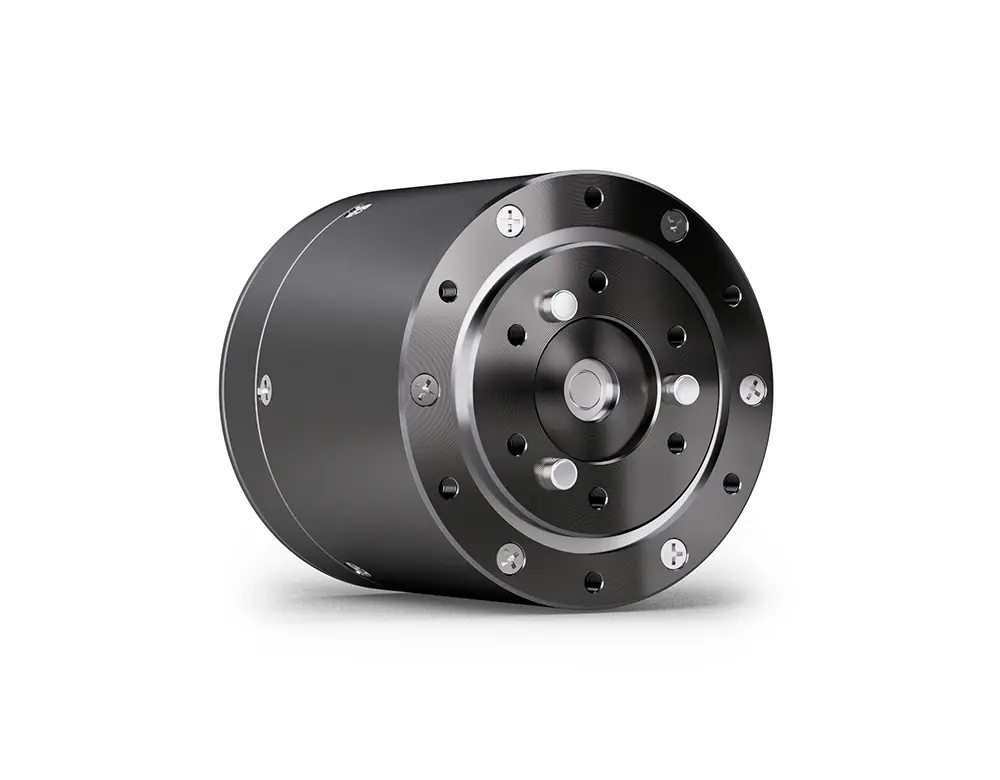 %11CubeMars AK45-36 KV80US$ 222,30US$ 249,30
- Continuous torque
- 8 Nm
- Peak torque
- 24 Nm
- Speed
- 40 rpm
- Weight
- 340 g
- Torque margin
- %45
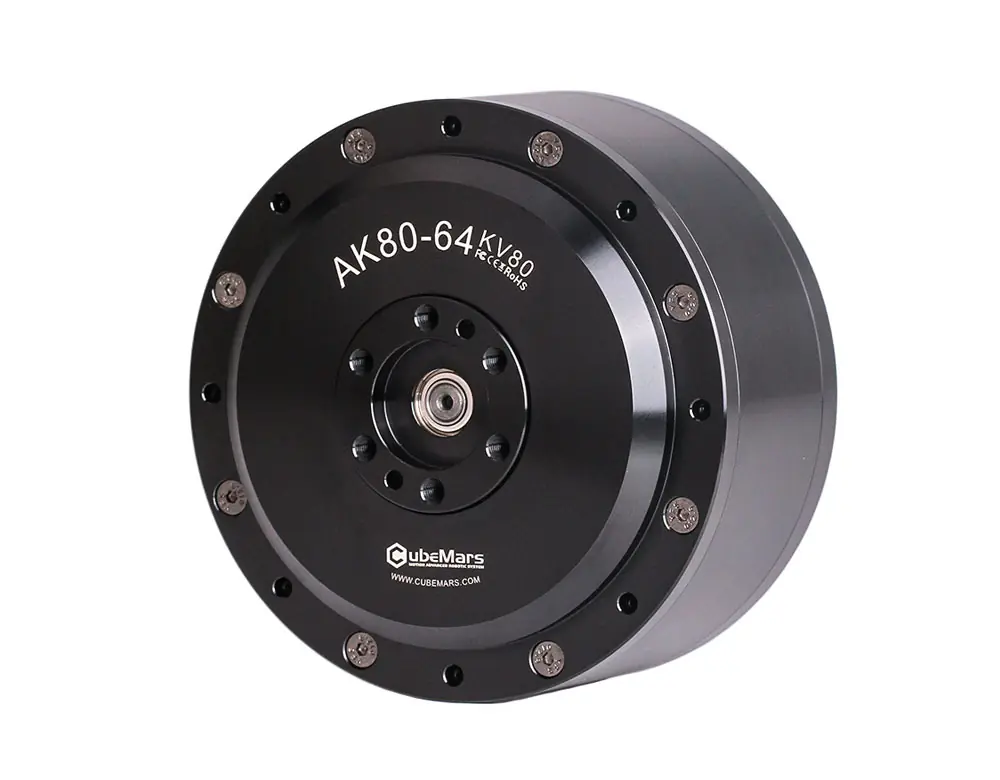 %11CubeMars AK80-64 KV80US$ 1.189,60US$ 1.336,80
- Continuous torque
- 48 Nm
- Peak torque
- 120 Nm
- Speed
- 48 rpm
- Weight
- 850 g
- Torque margin
- %770
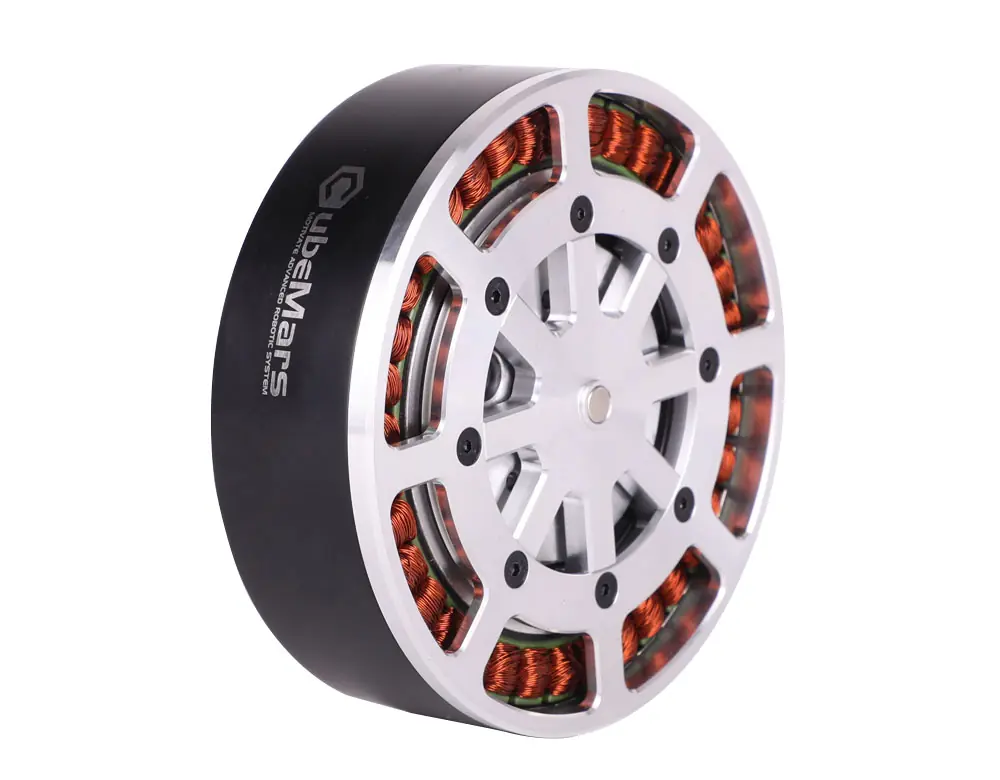 %3CubeMars AKE90-8KV35US$ 579,80US$ 599,80
- Continuous torque
- 55 Nm
- Peak torque
- 170 Nm
- Speed
- 120 rpm
- Weight
- 1,400 g
- Torque margin
- %897
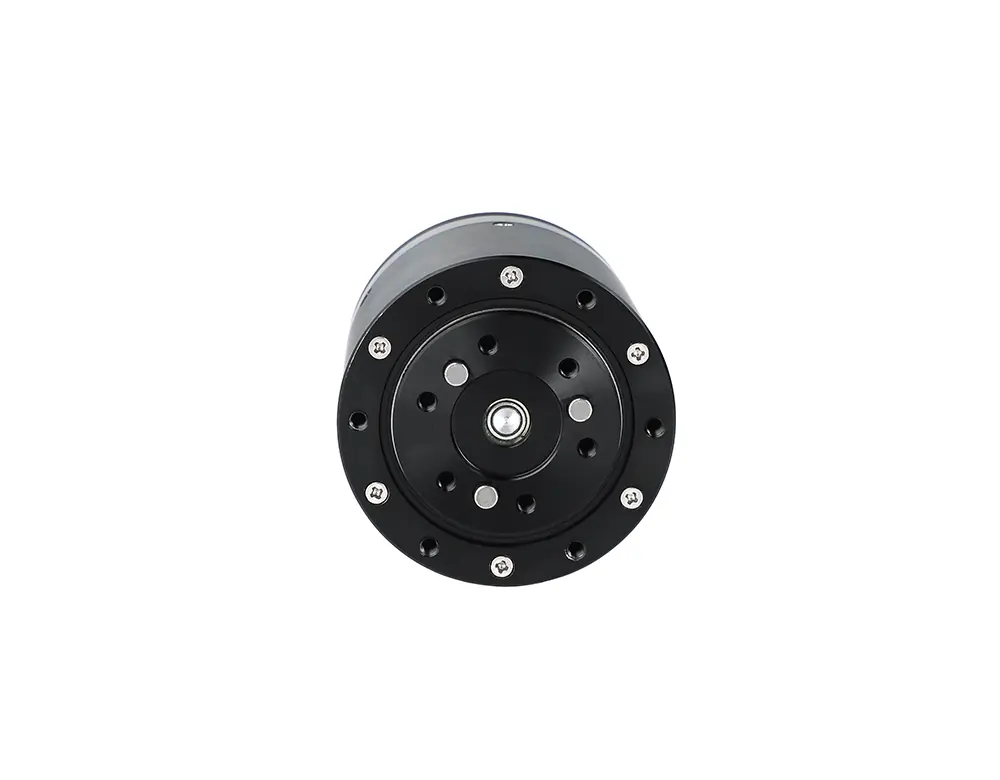 Sold outCubeMars AK45-36 V3.0 KV80US$ 279,40
- Continuous torque
- 8 Nm
- Peak torque
- 24 Nm
- Speed
- 40 rpm
- Weight
- 349 g
- Torque margin
- %45
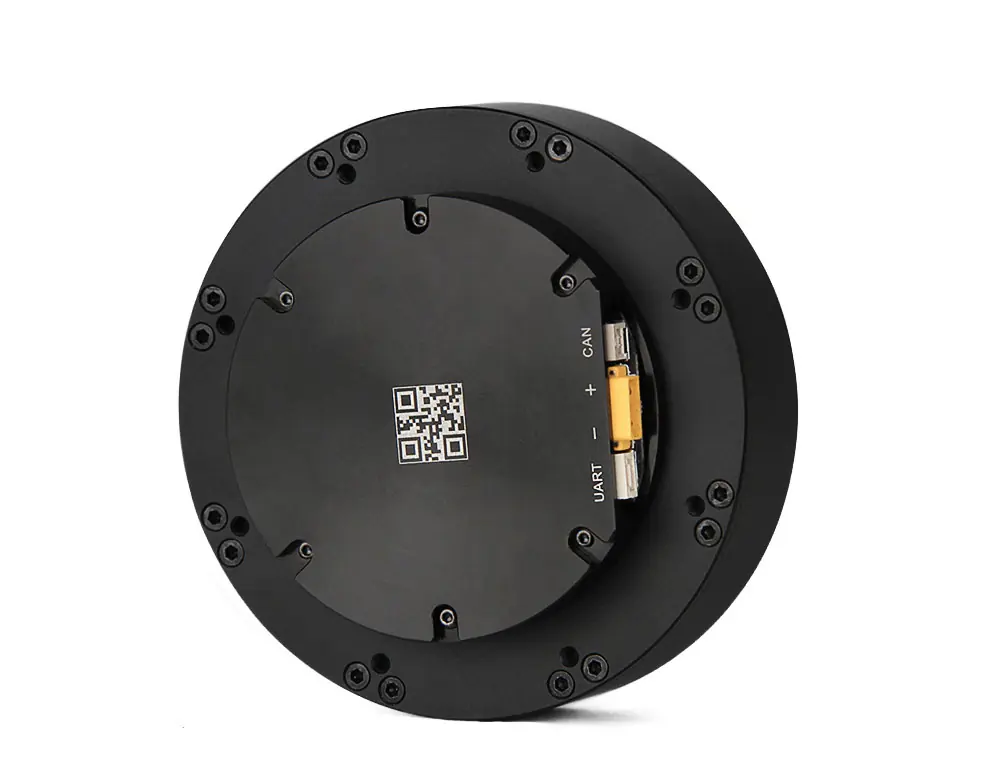 Sold outCubeMars AK80-6 KV100US$ 684,90US$ 700,90
- Continuous torque
- 6 Nm
- Peak torque
- 12 Nm
- Speed
- 603 rpm
- Weight
- 485 g
- Torque margin
- %9
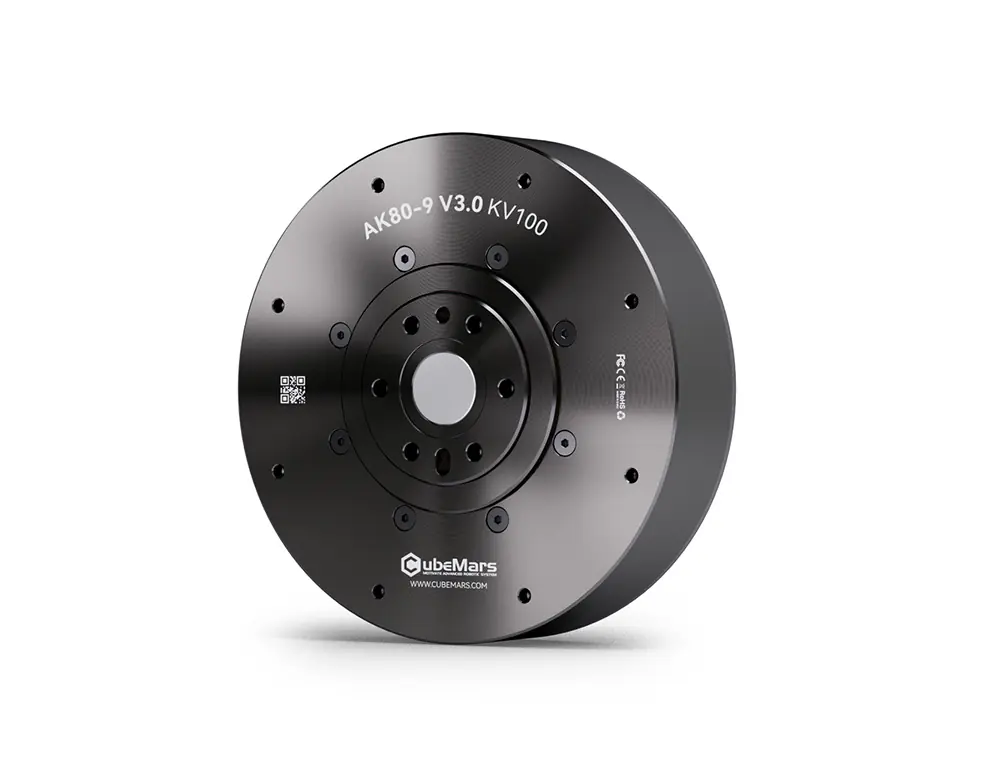 Sold outCubeMars AK80-9 V3.0 KV100US$ 696,90
- Continuous torque
- 9 Nm
- Peak torque
- 22 Nm
- Speed
- 390 rpm
- Weight
- 490 g
- Torque margin
- %63
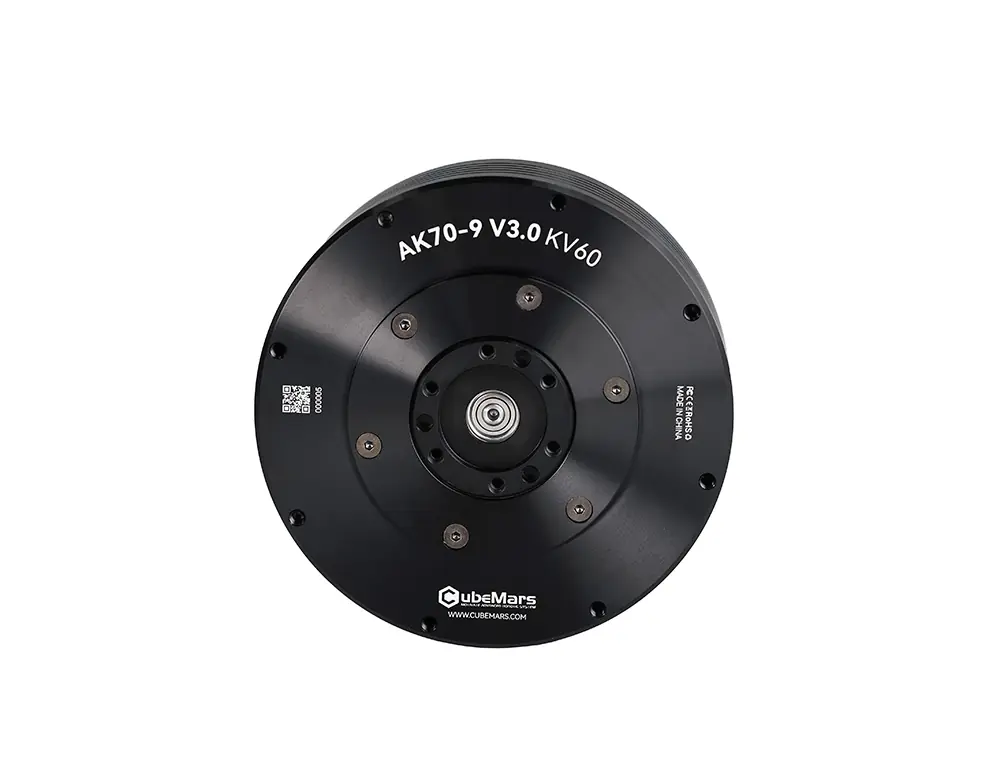 Sold outCubeMars AK70-9 V3.0 KV60US$ 600,80US$ 660,90
- Continuous torque
- 8.5 Nm
- Peak torque
- 29.2 Nm
- Speed
- 260 rpm
- Weight
- 540 g
- Torque margin
- %54
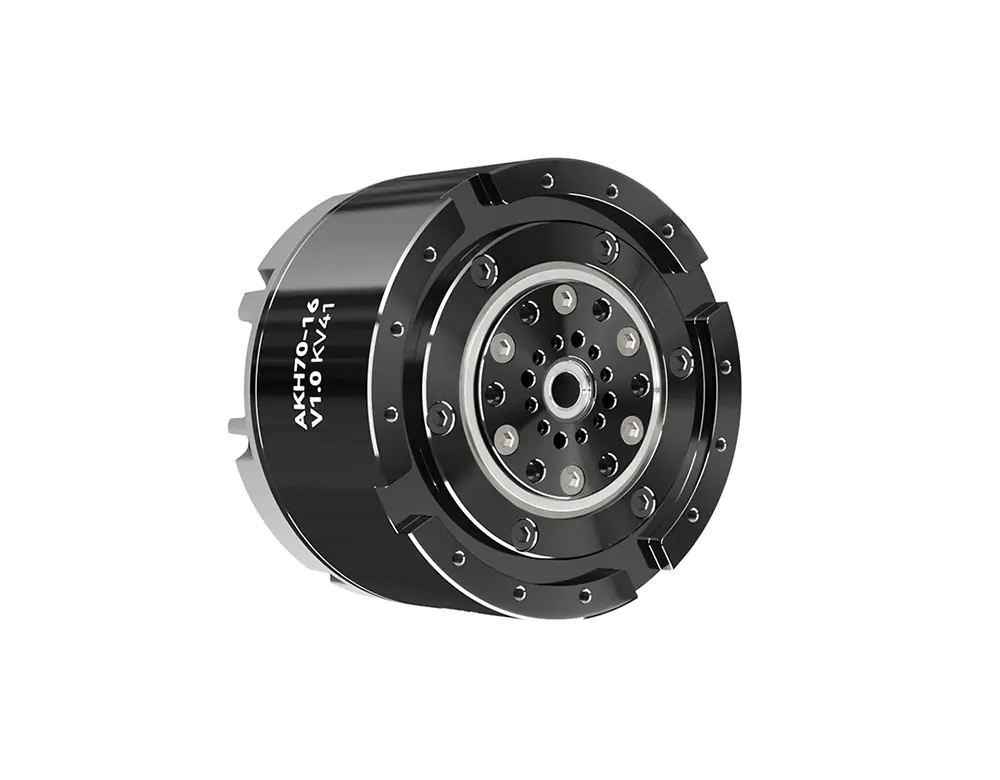 Sold outCubeMars AKH70-16 KV41US$ 961,30
- Continuous torque
- 26 Nm
- Peak torque
- 78 Nm
- Speed
- 90 rpm
- Weight
- 879 g
- Torque margin
- %371
The calculation uses the most demanding position, with the arm horizontal. Continuous torque is what holds the load, peak torque adds what is needed to accelerate. Results are a preselection. Confirm the choice with us, taking friction, gearbox efficiency and duty cycle into account.
Let's choose togetherFormulas and worked example
The torque a robot joint motor has to carry is the weight of the load multiplied by its horizontal distance from the joint axis. That distance is largest when the arm is horizontal, so the calculator uses that position as its reference.
Continuous torque
This is the torque needed to hold the load in the air. The weight of the arm itself is added, assuming its centre of gravity sits at the middle of the arm.
Tcontinuous = g × (mload × L + marm × L / 2) × k
Here g is gravitational acceleration (9.81 m/s²), mload the payload at the end, marm the mass of the arm itself, L the distance from the joint axis to the load's centre of gravity and k the safety factor. The rated (continuous) torque of the chosen motor must be above this value.
Peak torque
While the arm accelerates, the motor has to rotate the load as well as hold it. The torque for that is the arm's moment of inertia about the joint axis (J) multiplied by the angular acceleration (α).
J = mload × L² + marm × L² / 3
α = ω / t, ω = rpm × 2π / 60
Tpeak = (g × (mload × L + marm × L / 2) + J × α) × k
Here t is the time to go from standstill to the target speed. The shorter the time, the higher the acceleration and therefore the peak torque. The peak torque of the chosen motor must be above this value.
Worked example
With the calculator's starting values, that is a 1 kg load, a 0.3 m arm, 0.5 kg of arm mass, 30 rpm, 0.2 seconds of acceleration and a safety factor of 1.5, the calculation goes like this.
- The torque to hold the load is 9.81 × (1 × 0.3 + 0.5 × 0.3 / 2) = 3.68 Nm.
- With the safety factor, the continuous torque is 3.68 × 1.5 = 5.52 Nm.
- The moment of inertia is 1 × 0.09 + 0.5 × 0.09 / 3 = 0.105 kg·m².
- 30 rpm is 3.14 radians per second. Reaching that speed in 0.2 seconds takes an angular acceleration of 15.7 rad/s².
- The extra torque to accelerate is 0.105 × 15.7 = 1.65 Nm.
- The peak torque is (3.68 + 1.65) × 1.5 = 7.99 Nm.
The lightest model that meets this requirement is the 340 g CubeMars AK45-36 KV80. Its rated torque is 8 Nm, its peak torque 24 Nm and its rated speed 40 rpm.
Why a safety factor of 1.5
The formulas leave out friction, gearbox losses, cable drag and unexpected impacts. The factor covers that gap. For a preselection, a value between 1.5 and 2 is common. If the load or the arm dimensions are not final yet, starting with 2 is safer.
What the calculation leaves out
The calculation looks at a single joint and a single load. In an arm with several joints, the lower joint also carries the motors of the joints above it. When choosing a shoulder motor, for example, add the weight of the elbow and wrist motors to the load or to the arm mass. The duty cycle, meaning how long the motor runs close to peak torque, also sets how hot it gets. For a joint that will work near peak torque most of the time, leave a wider margin on rated torque.
Frequently asked questions
The questions we hear most about using the calculator.
Where do I enter the elbow motor's weight when sizing the shoulder motor?
If the elbow motor sits near the end of the arm, add its weight to the payload. If it sits near the middle of the arm, adding it to the arm mass is enough. If you are not sure, adding it to the payload gives the safer result, because the calculator places the payload at the very end of the arm.
How do I find the joint speed in rpm?
Divide the angle the joint turns in one second by 6. A joint that turns 180 degrees per second, for example, runs at 30 rpm. In walking robots and fast arms this can go above 60 rpm, and in slow positioning joints it can stay below 10 rpm.
What if no model comes up?
First check the arm length and the payload, since torque grows in proportion to both. Shortening the arm, moving heavy parts closer to the joint axis or adding a counterweight or a spring lowers the required torque considerably. If no model comes up even then, write to us and we will look at a solution with an external gearbox together.
Why do frameless RI and RO motors also appear in the list?
Frameless motors come without a gearbox or housing and are built into your own mechanism. Their torque values are at the motor shaft. They suit a direct drive joint or a design with your own gearbox. If you are looking for a ready-made joint, look at the geared actuators in the AK, AKE and AKH series.
Is the calculator's result final?
No, the results are a preselection. The real requirement depends on friction, gearbox efficiency, duty cycle and the arm's motion profile. Send us the model you chose together with the details of your application and our technical support team will confirm it.